Basics7 min read
What Is a Non-VoIP Number? Why Apps Reject VoIP Numbers
Why an app tells you a number “can’t be used,” what it actually checks when you type one in, and how to pick a number that gets the code through.
On this page
You type a number into a sign-up form and the app answers with “This phone number can’t be used for verification” or “VoIP numbers are not supported.” No code, no explanation. What happened is that the app looked your number up before sending anything, and didn’t like what it found.
The usual fix is a non-VoIP number: one that lookup databases list as a mobile line on a real carrier, rather than a number issued by an internet calling service. Here’s what that difference means, how apps tell the two apart, and what to do when a number is turned away.
VoIP vs non-VoIP: the four kinds of numbers
From an app’s point of view, every phone number falls into one of four groups.
| Type | Issued by | Tied to | How apps usually treat it |
|---|---|---|---|
| Mobile | A mobile carrier | A SIM on a mobile network | Accepted most widely |
| Landline | A fixed-line carrier | A physical address | Often refused for SMS; some apps offer a voice call instead |
| Fixed VoIP | An internet phone provider | A registered address or business account | Mixed: some accept it, many don’t |
| Non-fixed VoIP | An internet calling app | Nothing but an online account | Most often rejected |
Mobile numbers belong to a SIM or eSIM on a carrier’s network. Getting one means going through a carrier and, in many countries, registering the SIM to a name.
Landlines are fixed lines at an address. Most can’t receive text messages at all, so they rarely work for SMS codes.
Fixed VoIP numbers come from internet phone services linked to a real address, such as a home phone bundled with broadband or an office phone system. Because they’re tied to a customer account and an address, some apps accept them; others lump them in with every other VoIP line.
Non-fixed VoIP numbers are the ones apps worry about. Anyone can create one online in minutes, sometimes for free, with no address and no ID, and drop it just as fast.
Strictly speaking, landlines are non-VoIP too, but since they rarely receive SMS, a non-VoIP number in practice means a mobile number that reads as mobile when an app checks it.
How apps check a number
Most of the checking happens in the second after you tap “Send code,” before any SMS leaves. Apps don’t publish their exact rules, but the checks usually fall into four groups.
Line-type and carrier lookup
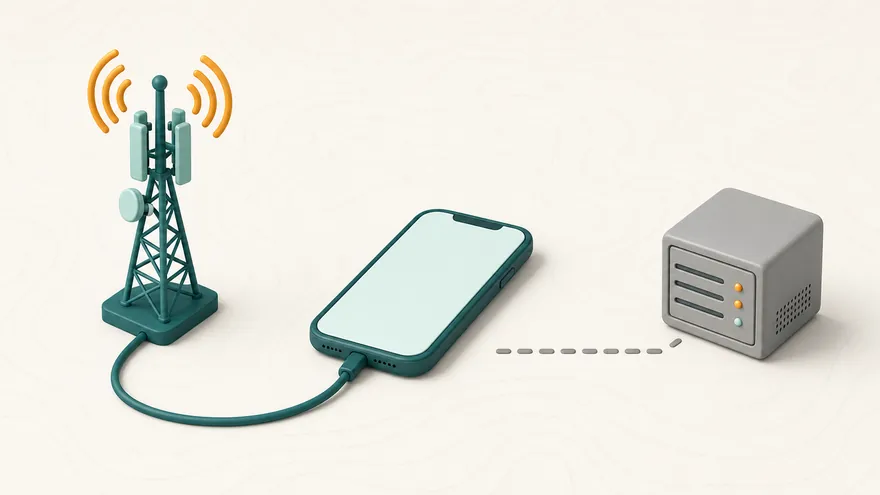
The app, or the verification service it uses, looks the number up in numbering-plan and carrier databases. The answer comes back with the country, the carrier and the line type: mobile, landline or VoIP. Some lookups also query the mobile network directly to see whether the number is active. Because numbers can move between carriers, lookups also rely on portability records, which aren’t always current, so a genuine mobile number is occasionally misread. Numbers from smaller carriers and resellers are sometimes classified inconsistently too. If the result says VoIP, many apps stop right there.
Number reputation
Risk-scoring services keep a history of numbers: how long they’ve been active, how often they appear in sign-ups, and whether they’ve been linked to spam or fraud. A number with a poor score may be refused even if it’s a genuine mobile line.
Reuse history
The app also checks its own records. Has this number already verified an account? Many apps allow only one account per number, or refuse numbers they have seen too often in a short period.
Context
Some apps compare the number’s country with your IP address, device language or app-store region, and add extra steps when they don’t line up.
Sometimes all of this passes and the SMS still never comes: the app’s SMS provider may filter certain routes, or the app may throttle repeated requests. From your side, it looks just like a refusal.
Why apps reject VoIP numbers
It isn’t really about the technology. It comes down to cost and accountability.
- They’re cheap to create in bulk. Phone verification exists to make each new account cost something. If numbers can be generated by the hundred for next to nothing, the check stops working, so apps block the kinds of numbers that make that possible.
- They’re easy to abandon. A number that can disappear tomorrow is a poor recovery channel, and apps want to be able to reach you again.
- They’re linked to abuse. Disposable numbers are a favorite tool for spam, fake reviews and promo abuse, so many risk systems treat VoIP as high risk by default.
- Every SMS costs the app money. Apps would rather not pay to verify lines that are likely to be thrown away.
The same logic catches any heavily shared number, VoIP or not. A genuine mobile number that many strangers have used on public inbox sites looks just as disposable to a risk system; free SMS sites vs virtual numbers explains why.
Policies differ, though. Some apps accept VoIP numbers, some block only non-fixed ones, and rules change without notice. What passes today may not pass next month.
What makes a number accepted
In our experience, numbers that get codes through tend to share a few traits:
- They read as mobile in line-type lookups, on a carrier that actually operates in that country.
- They have a clean history with that app: not already attached to an account, and not part of a burst of recent sign-ups.
- They come from a country the app serves, ideally one that fits the rest of your account.
- They sit on a route the app’s SMS provider delivers to, which you can only learn by testing, or from other people’s recent results.
No number is guaranteed to pass every app, and anyone who promises that is guessing.
Where SimBeep numbers fit
SimBeep numbers run on mobile networks in each country, not on VoIP ranges, which is why they usually pass the line-type checks that screen out internet calling numbers. Not every route is a SIM sitting in a single handset, though: some are resold lines on local mobile networks. Rentals make the distinction explicit, with three network types:
- Physical SIM: a SIM card in a real handset, the most widely accepted.
- Virtual line: a routed number on a local network, cheaper and fine for most services.
- Premium line: a SIM on a major carrier, for the strictest apps.
Line type is only the first hurdle, so the most useful signal is the delivery rate. Once you pick the app and the country, each network shows four bars: the share of recent orders where the code actually arrived. In practice, that one figure reflects the lookups, the reputation scores and the reuse limits together. And because the price is only charged when the SMS arrives, trying a network that turns out to be refused costs you a few minutes, not money.
If you’re new to all this, receiving SMS online without a SIM card walks through the whole process.
What to do when a number is rejected
The app refuses the number
Start with the error message: it usually tells you which check failed. Wording varies from app to app, but most messages fall into four patterns.
- “Invalid phone number”: usually a format problem. Select the country code once in the app’s dropdown, and don’t type it again in the number field.
- “This number can’t be used” or “not supported”: a line-type or reputation refusal. Try another network.
- “Already in use” or “used too many times”: the app’s reuse limit. Take a fresh number, ideally from another network.
- “Too many attempts”: a rate limit on your device or connection, not on the number. Wait before trying again, or even a good number will fail.
When an app refuses a number before sending anything, nothing arrives and you aren’t charged. From there:
- Change networks. Cancel the number (possible after 2 minutes) and pick another network in the same country, ideally one with more bars.
- Change countries if every network there fails. Some apps are stricter with certain countries than others.
- Go physical for strict apps. For a demanding app, or an account you’ll keep, rent a physical SIM or premium line: they tend to pass more checks, and the number stays yours for later logins.
The number is accepted, but no code comes
Give it a minute or two, then request the code once more if the app offers it. If the app switches to a voice call, pick the SMS option; these numbers receive text only. Still nothing? Cancel and change networks. Why SMS codes don’t arrive covers the other causes.
If you plan to keep the account, renting vs a one-time number helps you choose the right option from the start.
One note on intent: a number that passes these checks is meant to keep your own number private, not to get around a ban an app placed on you. The acceptable use policy has the details.
Next step: open the one-time numbers page, pick your app and country, and compare the delivery-rate bars before you choose a network.
Questions
Is a virtual number the same as a VoIP number?
Not necessarily. “Virtual” describes how you receive the SMS, online and without the SIM in your phone, while “VoIP” describes the type of line. A virtual number hosted on a mobile network reads as mobile when an app looks it up.
How can I tell whether a number is VoIP?
Carrier lookup tools report a number’s line type and carrier from numbering and portability databases, which is what apps check too. They’re usually right, but can lag behind numbers that recently changed carrier.
Why does one app accept a number that another rejects?
Each app uses its own lookup provider, risk scores and reuse limits, and some are simply stricter than others. That’s why you should check the delivery rate shown for your app before picking a network.
Am I charged if the app rejects the number?
No. You’re only charged when an SMS arrives, so if you cancel after 2 minutes or let the 20-minute window run out, the held amount returns to your balance automatically, as the refund policy explains.
Can I get the verification code by voice call instead?
No. SimBeep numbers receive SMS only, so choose the text-message option whenever an app offers a call.
Get a number in seconds
1,296 apps, 145 countries, charged only when the code arrives.
Keep reading
-
 Receive SMS Online Without a SIM Card: The Complete Guide
How to receive SMS online without a SIM card: every option compared, a step-by-step walkthrough, and how to pay only for codes that actually arrive.
Read the guide
Receive SMS Online Without a SIM Card: The Complete Guide
How to receive SMS online without a SIM card: every option compared, a step-by-step walkthrough, and how to pay only for codes that actually arrive.
Read the guide
-
 SMS Verification Code Not Received? 9 Causes and Fixes
SMS verification code not received? See the 9 common reasons a code doesn’t arrive on a virtual number, how to fix each, and what to check before retrying.
Read the guide
SMS Verification Code Not Received? 9 Causes and Fixes
SMS verification code not received? See the 9 common reasons a code doesn’t arrive on a virtual number, how to fix each, and what to check before retrying.
Read the guide
-
 Rent a Phone Number for SMS or Use a One-Time Number?
One-time vs rental number: when a single code is enough, when to rent a phone number for SMS, what each really costs, and how to keep a rented number.
Read the guide
Rent a Phone Number for SMS or Use a One-Time Number?
One-time vs rental number: when a single code is enough, when to rent a phone number for SMS, what each really costs, and how to keep a rented number.
Read the guide